Hypermobility in horses

Learn to recognise, understand and support the hypermobile horse

Buy the course here!

Unexplained lameness. Difficulty with balance. Recurring problems in training. A horse that struggles to build muscle, tires easily or shows behaviour that is difficult to explain.


Sometimes, all these issues seem like separate pieces of a puzzle.


Until you start looking at the horse differently.


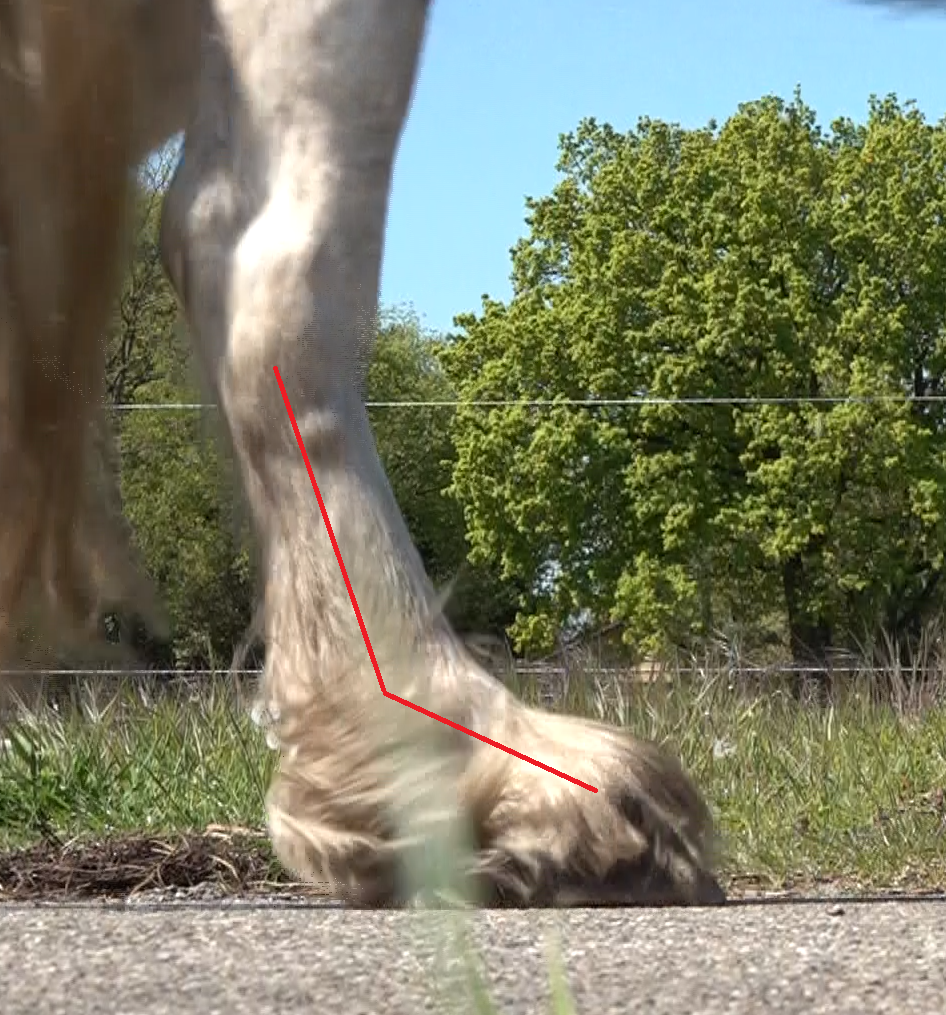
Hypermobility can affect much more than just the range of motion of the joints. It can influence the entire body, including balance and coordination, stability, muscle development, posture and movement, physical capacity, behaviour and performance.


In our online course Hypermobility in Horses, we help you understand the bigger picture.


You will learn what hypermobility is, how to recognise its characteristics in horses and, most importantly, what this knowledge means for the way we support, manage and train these horses.

Biomechanica

Professionals and owners

Training

Health

Do you recognise any of these signs in a horse?

Perhaps you have a horse that makes you feel that something just isn't quite right, but you find it difficult to put your finger on exactly what is going on.


For example, a horse that:

  • feels unusually flexible or “loose”;
  • struggles with balance and coordination;
  • regularly stumbles or seems to have difficulty organising its limbs;
  • moves very differently on the left and right side;
  • struggles to stabilise its body during movement;
  • easily loses balance during transitions, turns or lateral movements;
  • has difficulty developing or maintaining muscle mass;
  • does not seem to become sufficiently stronger despite training;
  • develops recurring physical problems;
  • shows varying or difficult-to-explain irregularities;
  • struggles with collection or carrying more weight on the hindquarters;
  • shows unexpected behaviour under saddle;
  • can be sensitive, tense, withdrawn or extremely explosive – a real “red button” horse;
  • repeatedly encounters the same difficulties in training;
  • has digestive problems;
  • or has developed allergies.


One of these characteristics alone does not automatically mean that a horse is hypermobile.


But when several of these signs occur together, it can be valuable to look beyond each individual problem.


What if different physical issues, behavioural challenges and training problems are all part of the same bigger picture?

Buy the course here!

Why is it so important to learn more about hypermobility?


In the early 2000s, we saw approximately one horse a week with clear signs of hypermobility.


That picture has changed considerably. These days, we only occasionally see a horse that is not, or barely, hypermobile.


At the same time, hypermobility often still goes unrecognised.


This is partly because when we think of hypermobility, we tend to think of just one thing: too much range of motion in the joints.


But hypermobility is far more complex than that.


It is a systemic condition. Its effects can manifest throughout the body and influence both the horse’s physical and mental functioning.


As a result, horses can display a huge variety of symptoms that, at first glance, do not seem connected at all.


For an owner, this can mean a long search for answers.


You investigate one problem. You make an adjustment. Things improve for a while. Then something new appears somewhere else.


The first step, therefore, is to recognise and understand.

What exactly is hypermobility?

What happens in the body?

What problems can be associated with it?

Why does one hypermobile horse respond completely differently from another?

And what does this mean for the way we keep, support and train these horses?


Only when you understand what is happening can you make more informed choices.

And that is exactly why we developed this course.

Why we created this course

In our work with horses, we repeatedly encountered horses that seemed to have several different problems at the same time.


Problems in training.

Difficulty with balance and coordination.

Recurring physical issues.

Unusual or challenging behaviour.

Difficulty developing muscle.


A horse that, every time one problem improved, seemed to encounter another limitation somewhere else.


When you try to solve each problem individually, it is easy to keep searching for answers.


But when you learn to look at the entire system, seemingly unrelated problems can suddenly start to make sense.


This is why we decided to explore hypermobility in horses in depth and combine the available knowledge with our many years of practical experience in biomechanics, training, behaviour and the myofascial system.


This course is the result.

What will you learn?

After completing this course, you will have a much broader framework for understanding hypermobility in horses.


You will learn, among other things:

  • what hypermobility actually means;
  • the different forms and characteristics you may encounter;
  • how to recognise signs of hypermobility in a horse;
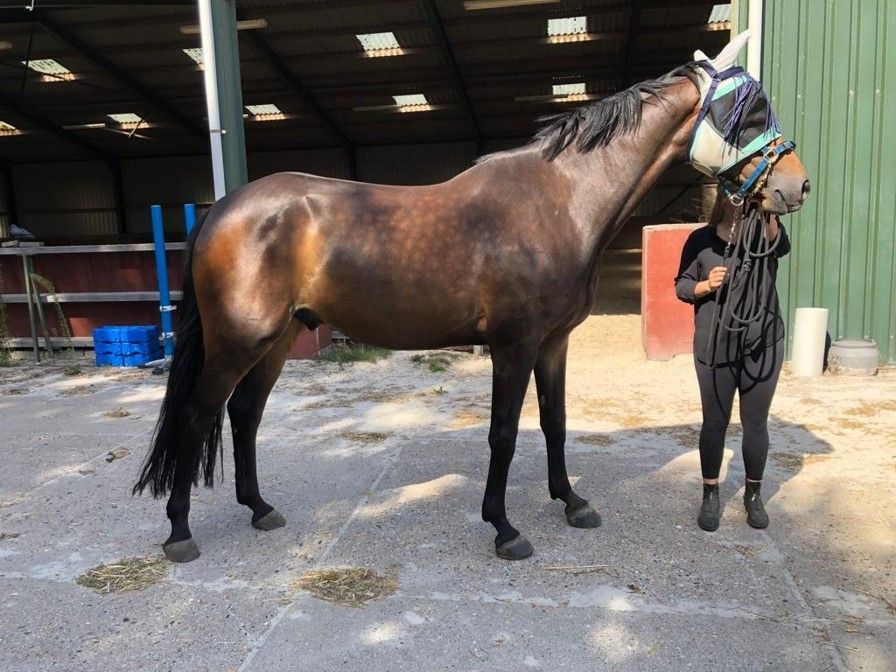
  • how to look at conformation, posture and movement;
  • the role played by connective tissue and the myofascial system;
  • why stability and mobility are not the same thing;
  • how hypermobility can affect balance and coordination;
  • why some horses struggle with muscle development;
  • what compensations a horse may develop;
  • how behaviour can be connected to physical strain and insecurity in the body;
  • the influence of environment and management;
  • which considerations are important in training;
  • why “more training” does not always make a horse stronger;
  • how to better tailor training to what an individual horse can handle;
  • and how to connect different signs in a horse.


The goal of this course is not to simply put a label on every horse.


The goal is to help you observe more effectively, recognise connections and make more informed choices.

Buy the course here!

The content of the course


Module 1 – What is hypermobility?

We start with the basics.

What exactly do we mean by hypermobility? When is an increased range of motion simply normal variation, and when does stability become a challenge?

You will learn about the processes involved and why hypermobility encompasses much more than just the range of motion of a joint.


Module 2 – Why is hypermobility a systemic condition?

Hypermobility is not simply a problem of the joints. It is a systemic disorder that can affect different tissues and organ systems throughout the body.

As a result, horses can develop symptoms that, at first glance, may appear to have nothing to do with hypermobility.

In this module, you will learn to look beyond the joints and understand why apparently unrelated symptoms may actually be connected.


Module 3 – How can you recognise hypermobility?

In this chapter, we move from theory to practice.

Using a variety of case studies, we show you how hypermobility can present differently in individual horses and which characteristics you may encounter.

You will learn what to look for and how to connect different findings.

We also discuss several tests for hypermobility and explain how to interpret the results.


Module 4 – Training the hypermobile horse

Hypermobility requires a different perspective on training.


In this module, we discuss the most important considerations when training a hypermobile horse.


You will gain a better understanding of why certain training choices are particularly important for these horses.


This module is not intended to be a complete training course in which we take you step by step through all exercises and training principles.


If you would like to learn more about the practical training of horses and how to systematically develop balance, body use and strength, our online course 4D Equestrian Training is the perfect next step.


Module 5 – Managing the hypermobile horse

Supporting a hypermobile horse involves much more than training alone.

How a horse lives, moves and is cared for during the other hours of the day can have a major influence on how well it is able to cope with its body.

In this module, we look at the day-to-day management of the hypermobile horse.


Module 6 – Behavioural challenges in hypermobile horses

What does hypermobility have to do with behaviour?

Often, much more than you might initially expect.

In this module, we explore the relationship between the body, nervous system, stress and behaviour.


Module 7 – The future of the hypermobile horse

What happens if we continue along the path we are currently following? And what choices can we make?

In this final chapter, we look beyond the individual horse. We consider what we are currently seeing in hypermobile horses and what this could mean for the future.


What happens when we fail to recognise hypermobility, or recognise it too late? What are the consequences if we continue training, breeding and selecting without taking sufficient account of hypermobility? And what choices can we make to change this?

Buy the course here!

Who is this course for?

This course was developed for anyone who wants to better understand the hypermobile horse.


Whether you own one horse or work professionally with several horses every day.


The course is particularly relevant for:

  • horse owners;
  • trainers;
  • instructors;
  • bodyworkers and massage therapists;
  • other equine professionals;
  • and anyone interested in health, biomechanics, behaviour and training.


No specific prior training is required.


We explain the material in an accessible way while also going into sufficient depth to make the course valuable for professionals.

Buy the course here!

What’s included?


With the online course Hypermobility in horses
you gain access to an in-depth course that brings theory and practice together.


You will receive:


  • 7 in-depth modules on hypermobility;
  • video lessons you can follow at your own pace;
  • practical examples and case studies;
  • different tests for identifying hypermobility;
  • Several live Q&As each year where you can ask questions and submit videos;
  • our knowledge and practical experience from different disciplines;
  • 1 year of access to the complete online course;
  • the option to watch lessons again during this period;
  • immediate access after purchase.


Language: English

Access: 1 year

Level: suitable for owners and professionals

Start: immediately after purchase

Price: € 229 incl. VAT


Buy the course here!

Who are we?

Karin Leibbrandt


I have spent the past 22 years rehabilitating horses, retraining them from hyperflexion to a healthy, biomechanically correct way of training, and learning how important a healthy, functioning myofascial system is (for more information, see the knowledge base). I have also developed my own riding method, called 4dimensiondressage, have been providing training courses for 12 years and wrote the book: “Je paard succesvol trainen; Paardvriendelijk presteren met het moderne sportpaard”.

Lydia van Oosten


In my work as a behaviour trainer, I soon noticed that much behaviour has a physical component. This led me to deepen my knowledge of biomechanics, correct training and the myofascial system over the past few years. Reading behaviour, correct physical training and myofascial release are a powerful combination that enables me to help many horses and owners.

Frequently asked questions


Who is this course for?

The course is intended for anyone who wants to better understand hypermobility in horses. Horse owners, trainers, instructors and other equine professionals can all take the course.

No specific prior training is required. The information is explained accessibly, while also going into sufficient depth to make it relevant for professionals.


How do I know if my horse is hypermobile?

That is one of the things you will learn in this course. In Chapter 3, we guide you through recognising hypermobility. We discuss various case studies and tests, and share a practical protocol you can use to assess a horse systematically.


Is the course only relevant if I already know that my horse is hypermobile?

No. In fact, if you have a horse with several physical problems, unusual behaviour or recurring challenges whose underlying cause you do not fully understand, this course may be particularly valuable.

The course helps you learn to recognise hypermobility and better connect different signs.


Will I learn how to train a hypermobile horse in this course?

Training is an important part of the course, and we discuss what you need to consider when training a hypermobile horse. However, this is not a complete training programme.

If you would like to learn in depth how to train a horse in areas including balance, body use, coordination and strength, you can explore our online course 4D Equestrian Training further.


Can I use this course to diagnose my horse myself?

The course gives you extensive knowledge about hypermobility, teaches you to recognise its characteristics and includes practical tests and a protocol for assessing a horse.

However, the course does not replace a veterinary examination. If you have concerns about your horse’s health or your horse is experiencing physical problems, we always recommend consulting a veterinarian.


My horse has no problems. Is the course still relevant?

Absolutely. Not every hypermobile horse shows the same symptoms, and recognising hypermobility early can provide valuable information for the management and training choices you make.


Is hypermobility only a joint problem?

No. This is actually one of the key topics covered in the course. We approach hypermobility as a systemic condition and therefore look beyond an increased range of joint motion alone.

You will learn how hypermobility can affect different systems in the body and why the symptoms in hypermobile horses can vary so widely.


Is the course also suitable for trainers, instructors and other professionals?

Yes. Especially when you work with horses professionally, it is valuable to be able to recognise hypermobility and understand what it can mean for behaviour, ability to cope with workload, management and training.

The course gives you a broader framework for looking at the horses in your everyday practice.


How long will I have access to the course?

You have access to the complete online course for 1 year. During this period, you can follow the lessons at your own pace and watch them again.


In which language is the course available?

The course is available in English.


Can I start right away?

Yes. After purchasing, you will receive access to the online learning environment and can start the course immediately.

Disclaimer

The content of this online course is intended solely for general informational and educational purposes. The information has been compiled with the utmost care by Equine Health and Training. Nevertheless, we cannot guarantee the completeness, accuracy or currency of the information provided.


The use and application of the information in this course is entirely the user’s own responsibility.


The content of this course is not intended as veterinary advice and does not replace examination, diagnosis or treatment by a veterinarian. If you have questions or concerns about your horse’s health or welfare, or if your horse is showing physical symptoms, always consult a veterinarian.

Contact us any time

Contact Us